04 — The Last Call & The Loop
6 · The last call is yours
The cells' work is folded up, the Main PM opens the final pull request into master, and the company goes quiet. The decision comes back to exactly where it started — with you. You're the only one who ever touches master, and anything waiting on you sits in the CEO Approval Queue until you act.
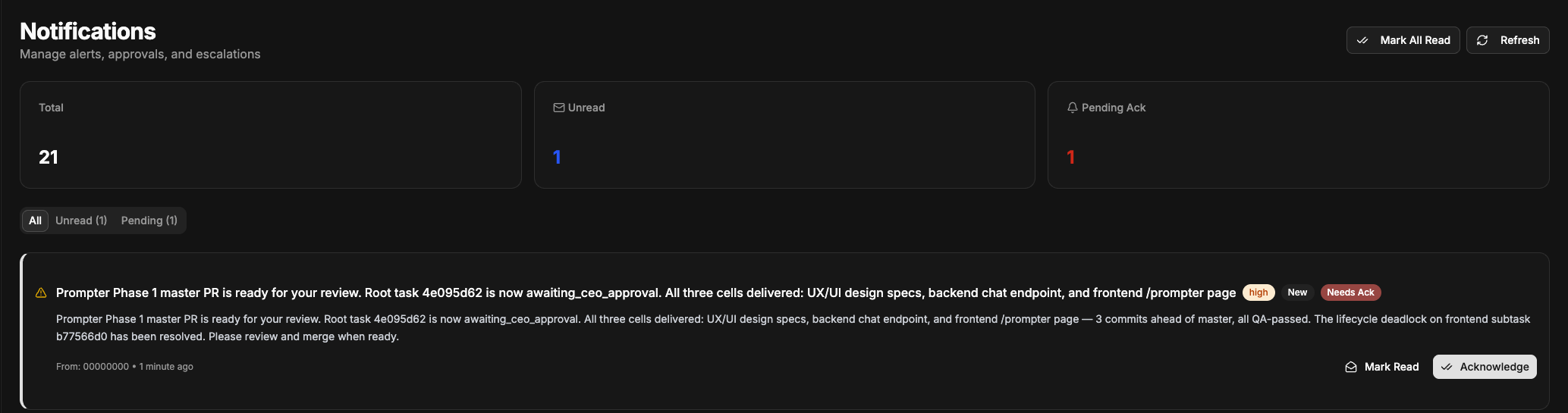
The hand-off back to you. The integrated PR is open, every cell has delivered, QA is green — and it waits. Nothing reaches master without your word.
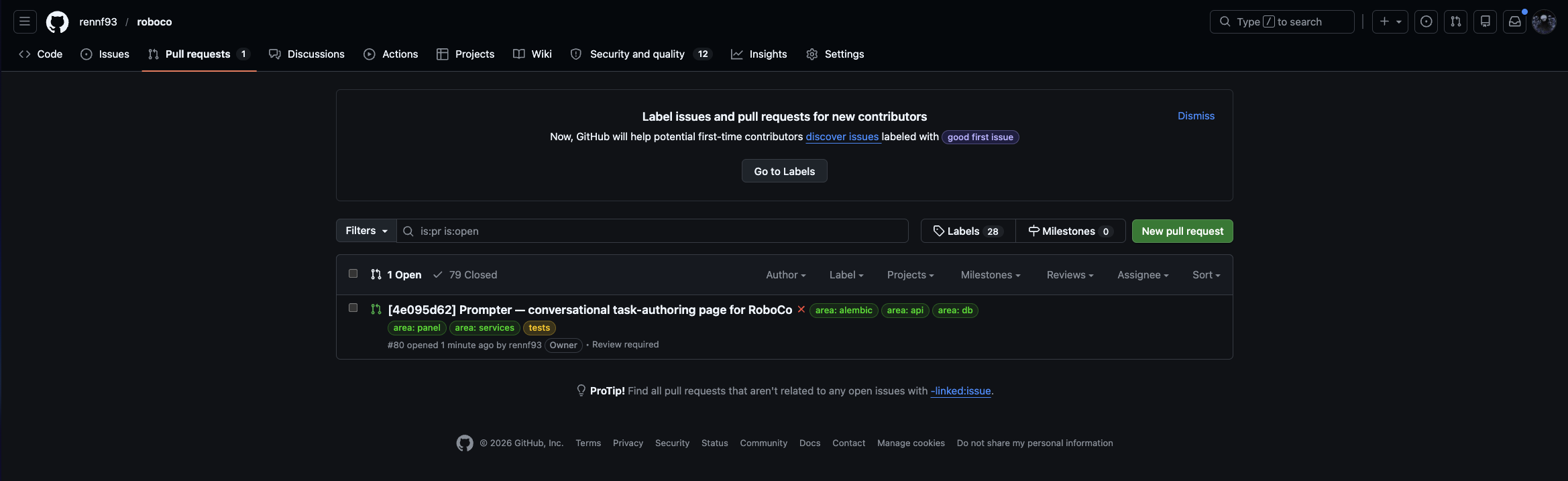
And it is a real pull request, on the real repository — not a simulation. The company's work shows up exactly where any engineer would look for it.
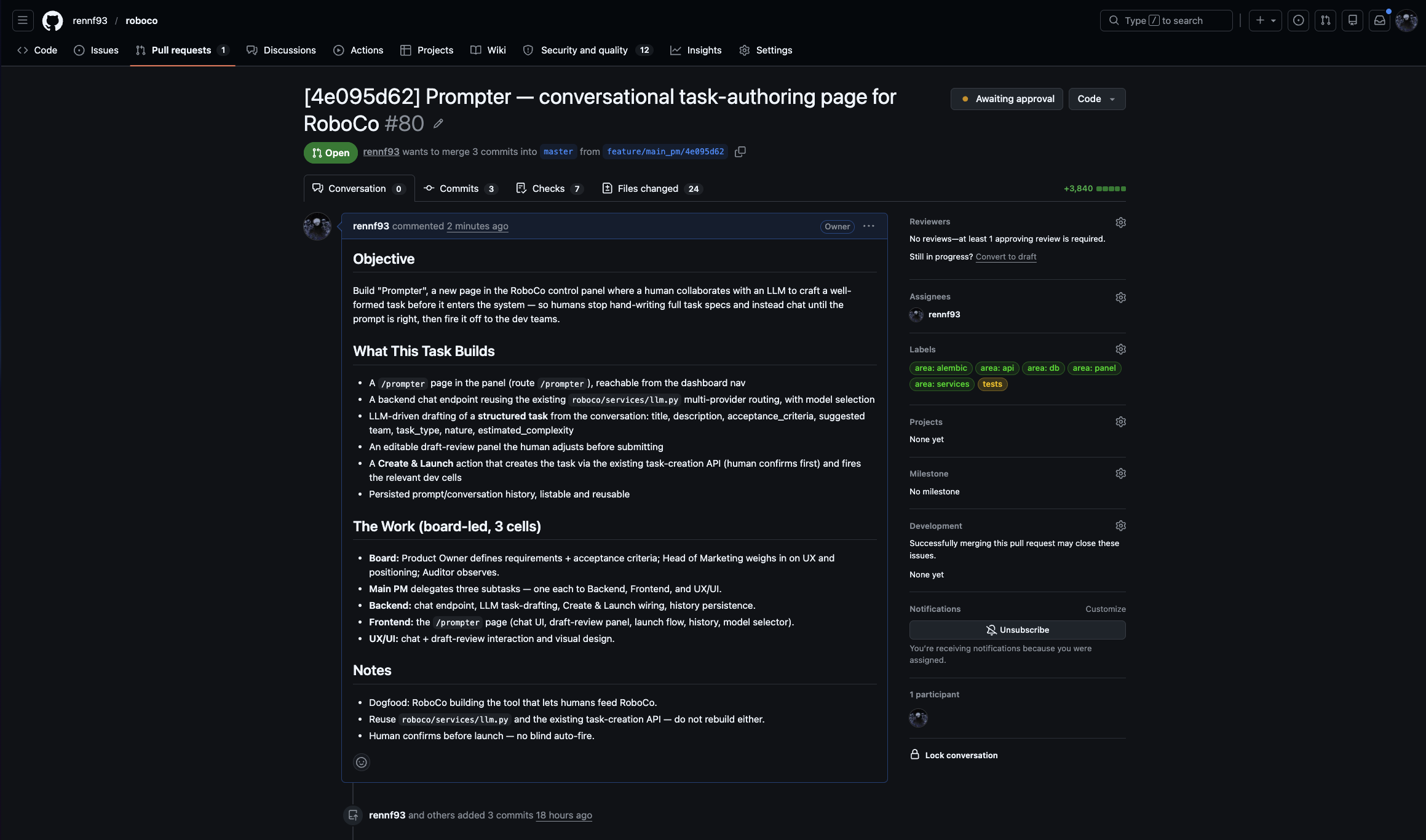
Open it and the whole brief is there — the objective, what was built, the board-led split across the three cells, and the company's own notes — written by RoboCo, for you to read before you decide.
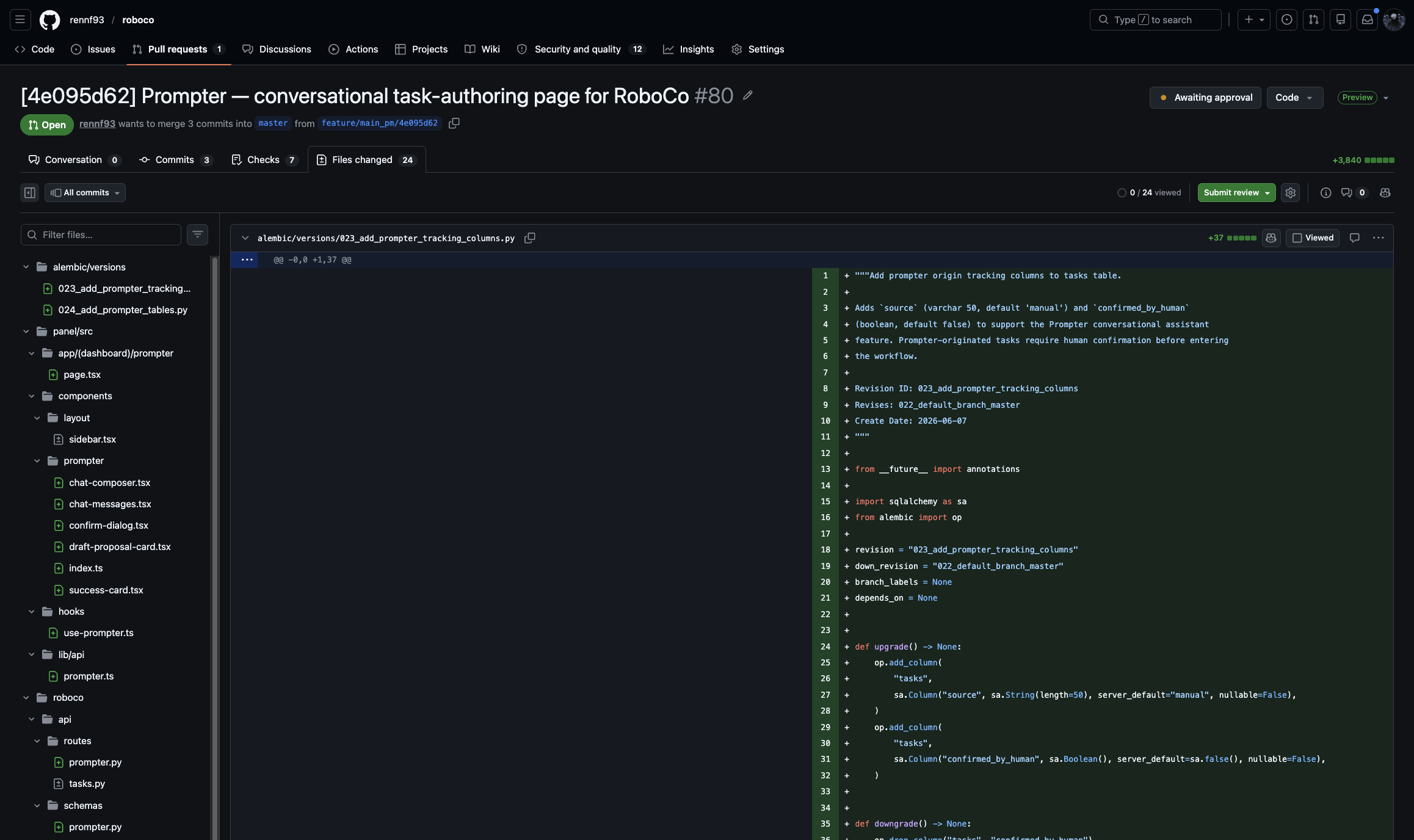
The real diff, laid out for you to inspect — the migrations, the endpoints, the panel components. This is the substance you are signing off on.
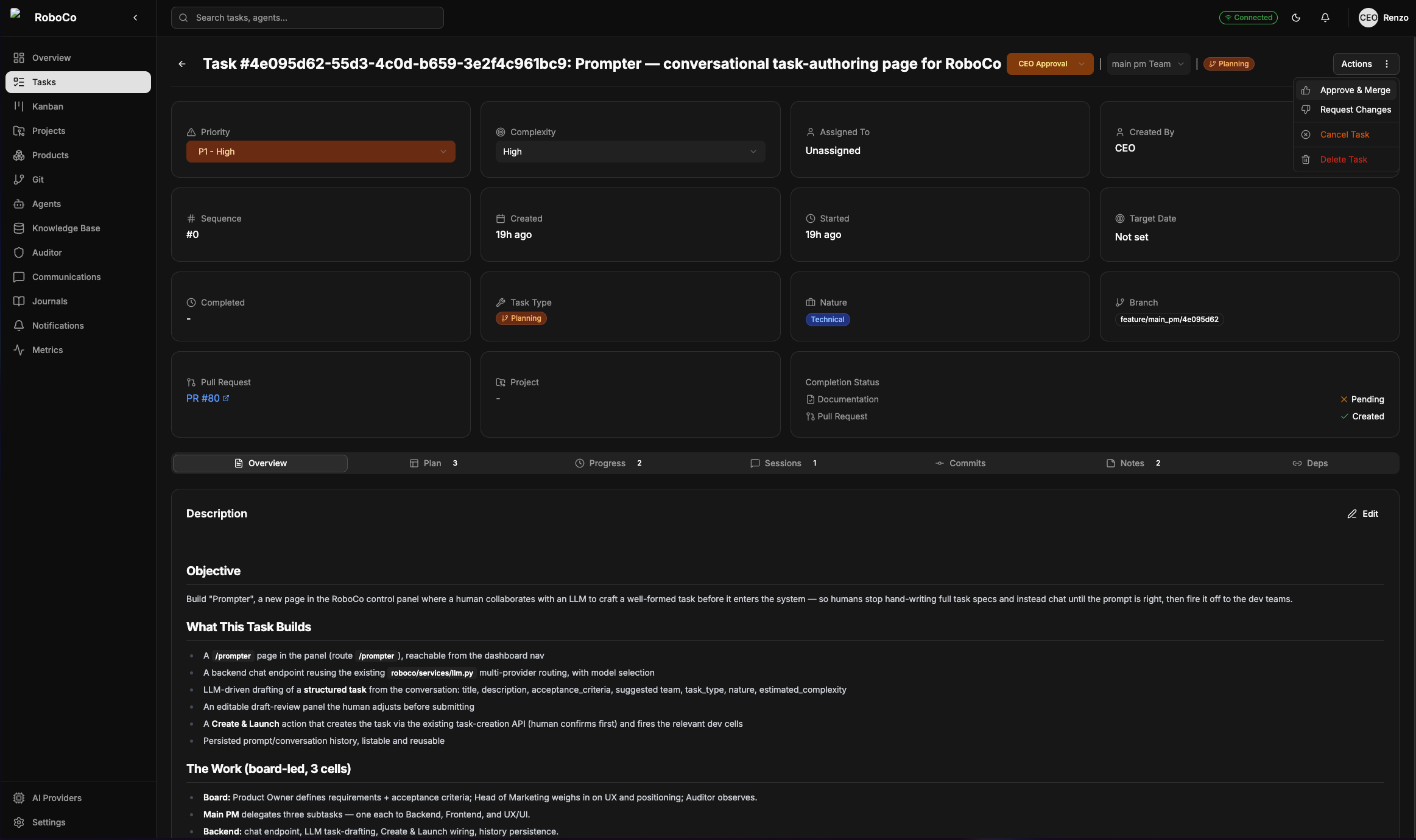
Your two words. Approve & Merge and it ships to master; Request Changes and it goes around for another lap. The last call has the same shape as the first — one decision, yours alone.
The other queue: PRs you didn't open
Not every pull request comes from inside the company. When someone opens a PR against your repo — an external contributor, a fork — the read-only PR Reviewer picks it up, reads the diff against your standards, and posts a single change-request directly on the PR (it never chats, never merges, never decides). The PR then surfaces in the PR Review Queue on the Command Center — your second decision surface. There you Supersede it: the company cuts its own branch from the contributor's commits, hardens the work to your standards, opens its own PR, and — once that replacement merges — closes and links the original. Or you Dismiss it. Either way the call is yours, and the org never pushes to anyone else's fork.
And round it goes
You handed the company a task; it scoped it, built it, failed and re-ran its own QA, documented it, and brought it back as a single pull request for your sign-off. That's one complete pass.
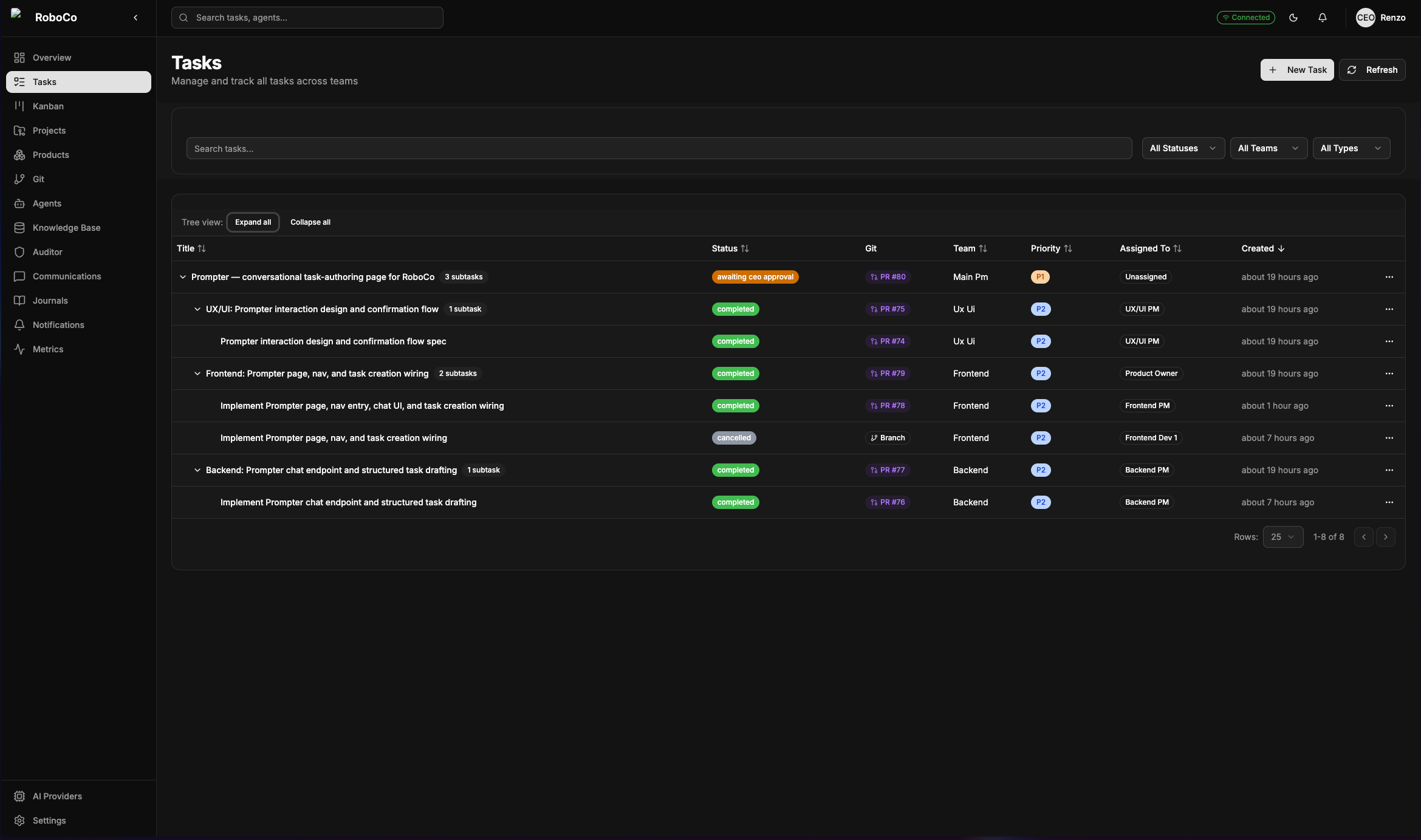
The whole tree in its final state — the parent waiting on your approval, every cell's task done beneath it. One feature, start to finish, with you at only the two ends.
And the feature in these screenshots is the proof. The Prompter wasn't built for a demo — it's a real page RoboCo's agents shipped to RoboCo's own control panel. A company building its own product, in front of you, is the whole point of RoboCo. What makes that hold together isn't a clever model or a lucky run; it's the organization — the roles, the gated lifecycle, the reviews and the sign-offs that keep twenty-five agents moving as a company instead of a crowd. Run as many of these passes as you like, across as many projects as you like.
Previous: ← The cells build it · Next: The business workflow →